


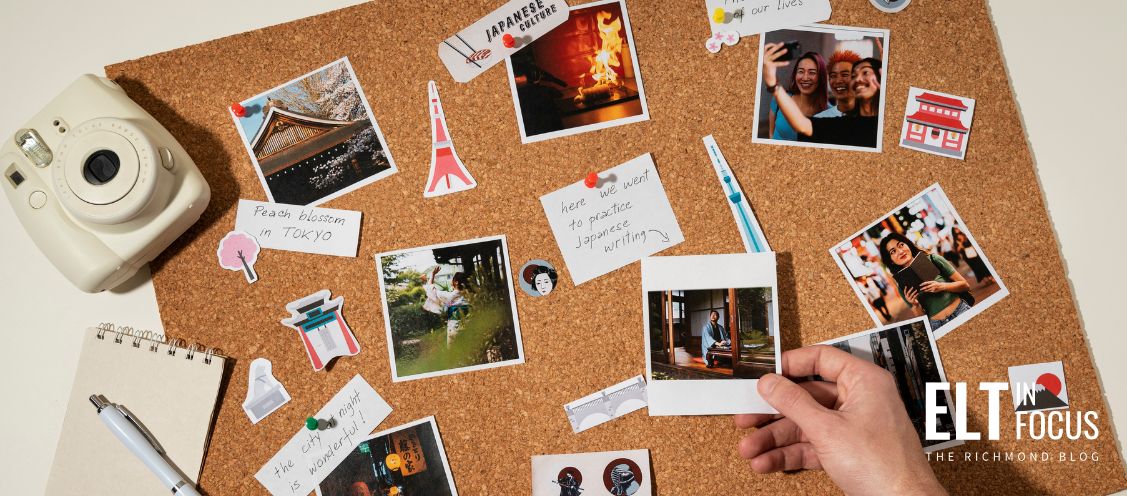


In simple terms, visual literacy is the ability to make sense of images in order to communicate and comprehend effectively. The term was first defined in 1969 by John Debes but it has been redefined many times since then. In today’s world visual literacy is increasingly important as digital media and technology include more images than ever. When teenagers log on to social media sites they see profile pictures, memes, advertising images and photos which might or might not have been manipulated or created by AI. Being able to interpret the information these images contain is a key skill which impacts on their everyday lives.
We often scroll past images without paying much attention to detail. Below are five activities which encourage students to take a closer or longer look and help them take a more critical view.
What’s the whole picture?
Sometimes an image is misleading because of the angle from which it is taken or how the photo has been framed. For example, a photo of a man sitting alone on a park bench might make us think they are lonely. If we could see a wider area, we might see that his partner and children are playing in front of him. This activity helps students think critically about how camera angles and framing influence our perception.
1. Show students a photo from a newspaper or social media post and ask them to think about:
2. Ask students to discuss how the camera angle and framing influences our perception.
This link has more than a hundred photos from alternate angles that work well with this activity.
https://www.boredpanda.com/alternate-angles-in-history-events/
Why was the photo taken?
People take photos for many different reasons. This might be to remember a special occasion, to capture an interesting scene or simply to share on social media. Or, for professional photographers, it might be to accompany a review or news article or as evidence of a social or environmental issue.
What’s real and what isn’t?
Sometimes images are fake. They can be AI generated or manipulated in some way using technology. Real images can also be used to deceive us into believing something which isn’t true. For example, a photo of a group of protesters at one event can be mis-used years later to accompany an article about a completely different event.
1. Ask students to discuss these questions, encouraging them to find and share any specific photos they might mention.
2. Provide students with some digital photos from social media news pages. Ask them to use a ‘reverse image search’ to find the source of the original photos. There are several websites you can use for this. For example https://tineye.com/
Does language change meaning?
When an image is accompanied by a caption, its meaning is made clearer. But what if the same image has two or more different captions? How does language change meaning?
Why did you take that photo?
When we take (and perhaps edit) a photo we make lots of choices. We think about the object of the photo, the best angle or lighting. We decide whether to crop a photo or add a filter, and we might use software to change it in some way. These are all individual choices, and we are rarely questioned about them. In this activity, students take on a creative role (photographer, advertiser, influencer) and explain their visual choices.
1. Ask students to bring a photo to class that they have taken. Explain that they are going to role-play being an advertiser or an influencer. They are going to ask each other the following questions:
2. Students work in pairs or small groups sharing and discussing their photos.
In a world where images shape opinions, influence decisions and often blur the line between truth and manipulation, developing visual literacy is essential for teenagers. By integrating simple, engaging activities like these into the ELT classroom, you can empower your learners to slow down, question what they see and interpret visual messages with greater awareness and confidence. Ultimately, fostering these skills not only enhances language learning but also equips young people to navigate digital spaces more critically, responsibly and thoughtfully in their everyday lives.
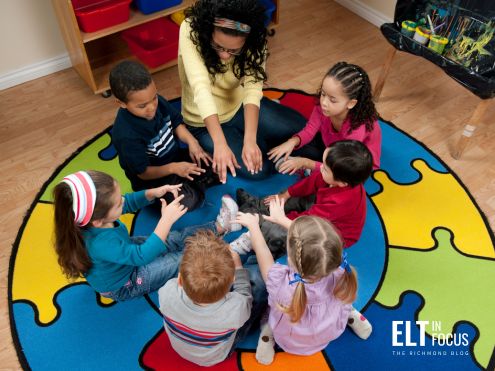

Socio-Emotional Learning (SEL) is a hot topic in education these days, often finding its way onto school websites and into teacher training modules. Beyond its buzzword status, SEL has deep implications for us as teachers. After all, emotional intelligence is a fundamental aspect of early childhood education. When we integrate SEL into daily classroom life, through games, expectations, and purposeful, creative activities, children gain the tools they need to understand themselves and build healthy relationships with others.
Read this post

When the school year draws to a close, marks frequently take center stage. Students, especially older ones, sit quietly bent over their final papers, projects are hastily wrapped up, and the countdown begins. But what if, instead of rushing toward the end, we paused to truly honour the journey we’ve taken with our learners?
Read this post